FCAT Reserve, Ecuador
Restoring Ecological Connections in the Choco Rain Forest
A landscape-scale restoration experiment testing how planted trees can rebuild trophic connectivity in one of Earth’s most biodiverse regions.
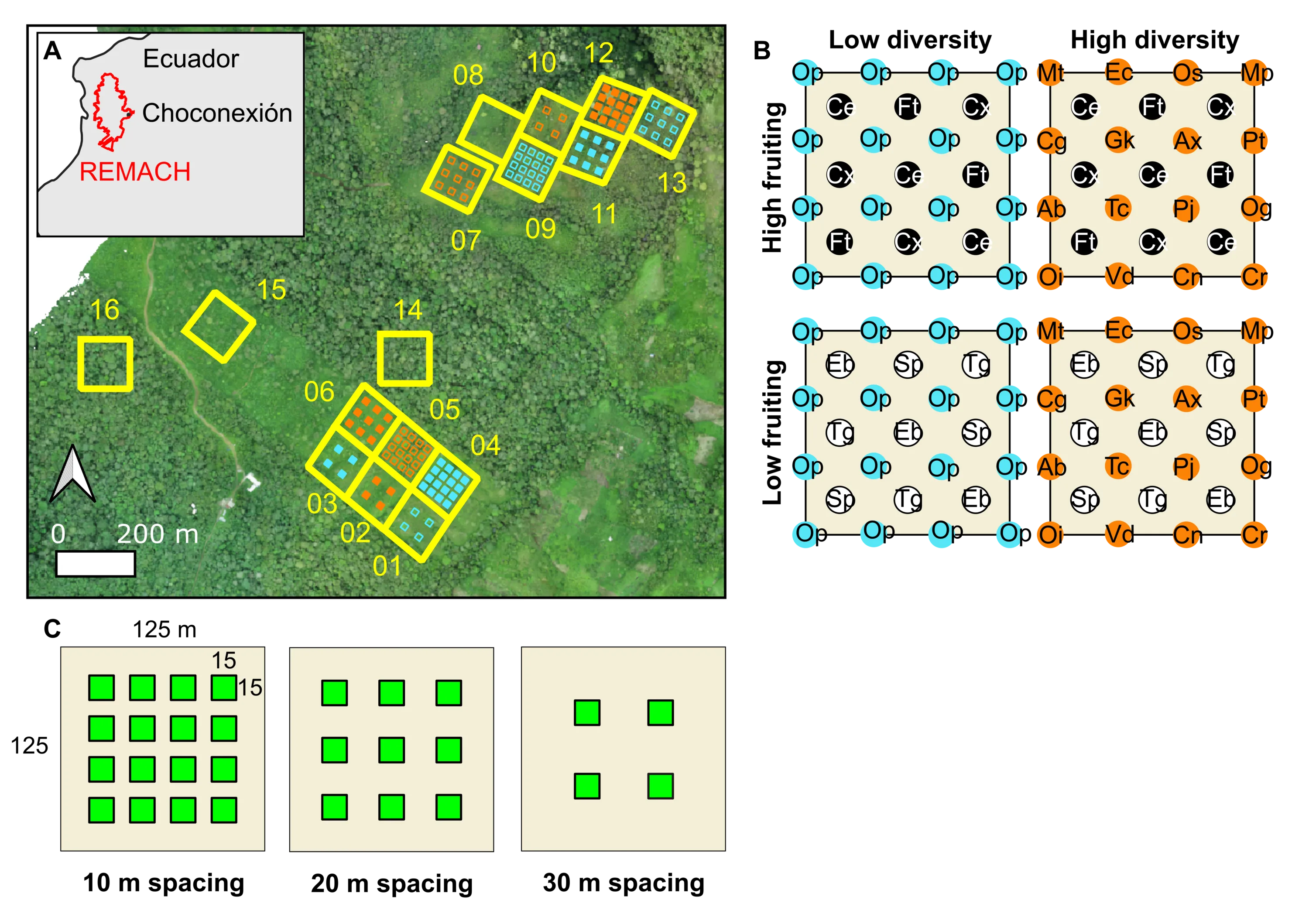
The Choconexion Experiment
The Choconexion Experiment is a long-term ecological research project that seeks to understand how tropical rain forests reassemble after they have been disturbed. By strategically planting native tree species and monitoring natural regeneration, the experiment investigates how different restoration approaches influence forest recovery over time.
Researchers track soil and light conditions, wildlife behavior, seed dispersal, and tree recruitment to understand how tropical forest succession is controlled by seed dispersal processes compared to environmental filtering.
The project also serves as a living laboratory for students, scientists, and local partners, fostering international collaboration and training in tropical restoration ecology. Ultimately, the Choconexion Experiment aims to generate practical insights to guide more effective forest restoration and conservation in the Ecuadorian Choco.