Research Projects
A growing number of collaborators and students are monitoring ecological variables within the Choconexion experiment, from birds and frogs to woody plant regeneration and the volatile compounds the forest gives off.
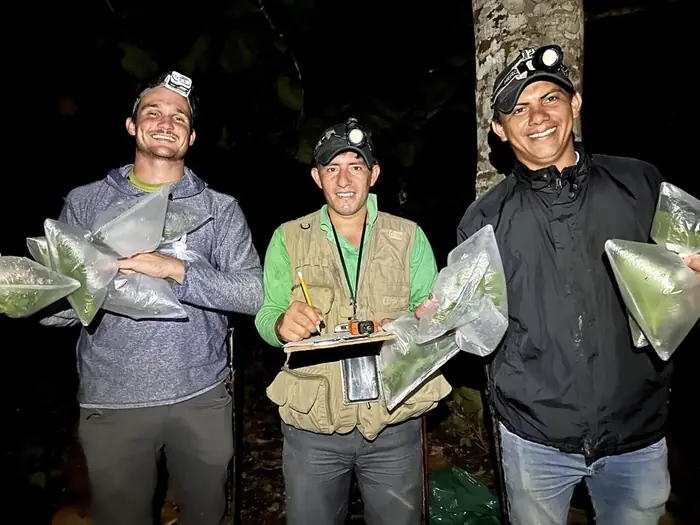
Amphibian Reforestation Monitoring
Researchers: S. Holden Jones, Darwin Zambrano Cantos, Julio César Loor Velez, Daniela Franco-Mena, Rakan A. Zahawi
Since 2023 we have monitored amphibian community recovery across our restoration sites using a network of transects established in 10 m and 30 m spaced planting islands. Each transect spans both planted and interstitial space, allowing us to examine how fine-scale structural complexity shapes amphibian recovery over the course of restoration. Control transects in natural regeneration areas and remnant forest within the FCAT Reserve provide points of comparison. Every year, we conduct visual encounter surveys six times per transect, across both the dry and wet seasons. Over three and a half years of monitoring, we have recorded 4,622 individuals spanning 23 species. Abundance is dominated by the widespread generalist Pristimantis achatinus, but in the past year we have begun recording individuals of forest-dependent species in the restoration sites including the Critically Endangered Leucostethus bilsa, and the Endangered Leptodactylus peritoaktites. We are collaborating with thermal ecologists to better understand how temperature influences recovery rates of different species, and hope to incorporate acoustic monitoring to allow us to better detect cryptic species while scaling up our monitoring efforts.
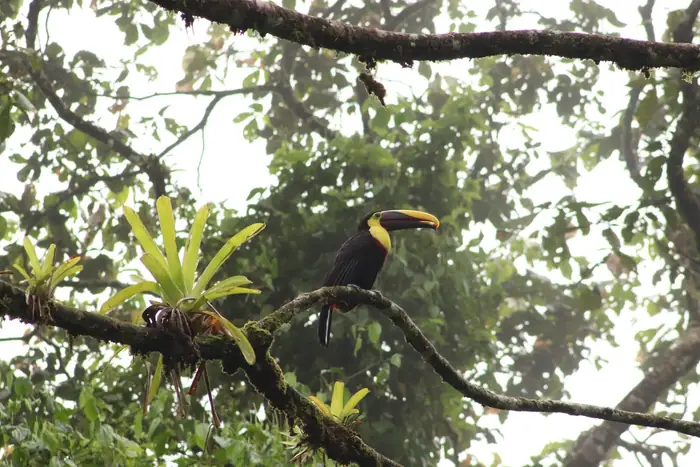
Avian Seed Dispersal and Restoration
Researchers: Nicole Lussier, Olivia Smith, Lars Brudvig, Gregory Paladines, Gloria Loor
In early successional tropical forests, plant diversity, phenology, and fruit availability strongly shape frugivorous animal composition. In turn, the composition of frugivorous animals determines the spatial distribution, quantity, and composition of dispersed seeds across tropical landscapes, as over 85% of plant species in these regions rely on frugivorous animals to disperse their seeds. These mutualistic feedbacks facilitate the formation of dynamic interaction networks that continuously restructure to influence establishing vegetation and frugivore communities through time. Therefore, this work aims to link the development of seed dispersal network structure to the assembly of establishing vegetation and frugivore communities through time to understand mutualistic feedbacks during tropical forest succession. We will do this by leveraging the Choconexion experimental restoration initiative. Through manipulating early successional vegetation structure, we will empirically test drivers of mutualistic interaction emergence via network analysis, how plant-frugivore networks restructure as forest succession progresses, and how this restructuring of interaction networks influences resultant plant and frugivore community structure through time as forests continue to grow and restructure with forest succession.
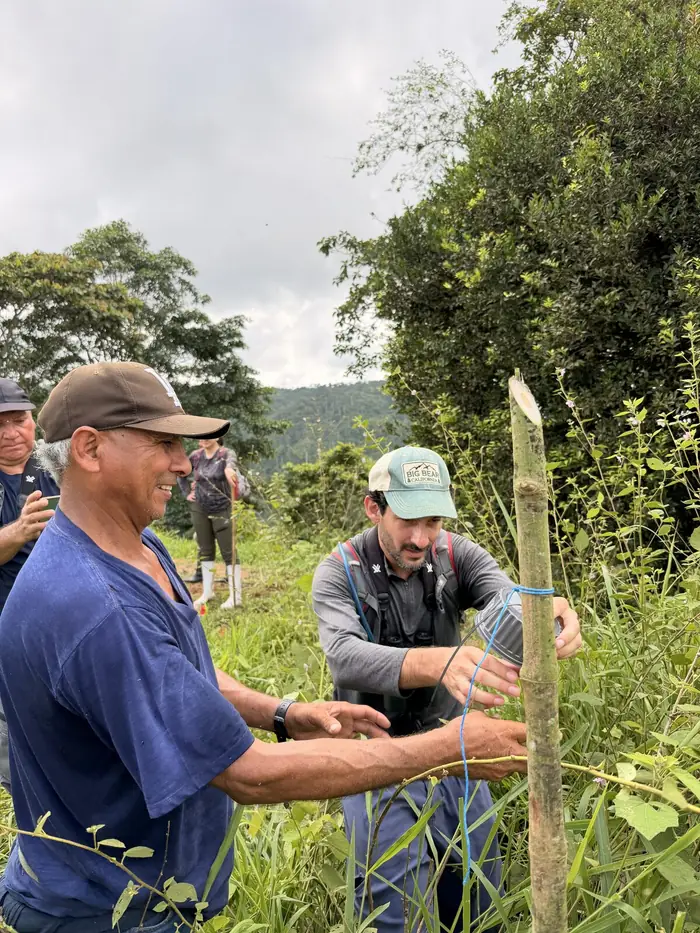
Estimating Fruit Availability by Measuring Plant-Emitted Gases
Researchers: Gabriel Isaacman-VanWertz, Shallon Jozi, Jordan Karubian, Chloe Chee-Zefi, Leighton Reid, Jacob Hayes
The smells of the forest come from plants emitting different gases — from fruits, flowers, and leaves — and go on to react in complex chemistry in the air. Birds and other animals use these scents, along with their other senses, to identify where food or shelter may be. Traditional methods of surveying fruit or food availability are time consuming and labor intensive. We are therefore testing whether the scents of the forest can be collected to estimate fruit availability, as well as to better understand the spatial distribution of these gases and their chemistry. We are developing approaches to passive air sampling to collect gases over weeks or months with low effort for analysis in the lab. Results will be used to better understand the food systems within the forest ecosystem as well as the impacts of plants on the regional atmosphere.
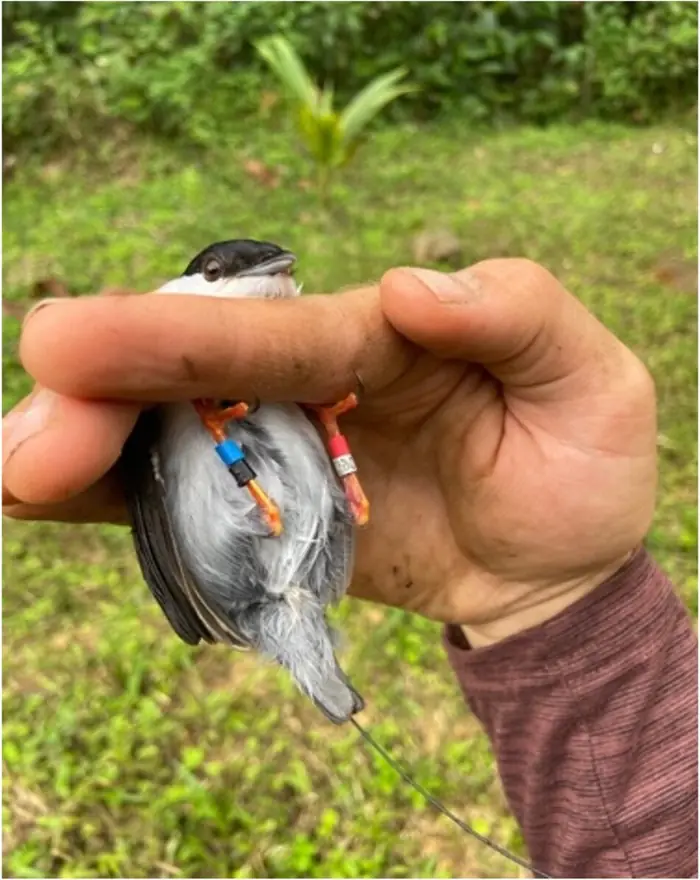
Lekking Manakins and Forest Recovery: Linking Behavior, Seed Dispersal, and Succession
Researchers: Martha E. Barta, Jairo Cabo, Belén Casanova, Jorge Olivo, H. Luke Anderson, Jordan Karubian
White-bearded manakins (Manacus manacus) are frugivorous (fruit-eating) lek-breeders, meaning males gather in space to perform complex mating displays for females. These gatherings – which occur at traditional sites called leks – provide a unique opportunity to study how a single species contributes to forest recovery. In this project, we are leveraging lek formation event(s) within the Choconexion project area to identify the importance of existing fruit resources on lek site selection. Given that males perform energetically costly displays and spend much of the day within lek boundaries, we hypothesize that leks will form in areas with high levels of pre-existing fruit availability. Using camera traps and direct behavioral observations, we are further identifying the influence of surrounding fruit resources on individual-level male mating success. Following lek formation, we are investigating the ways in which lek presence influences forest recovery trajectory. Given that leks are highly stable over time, we hypothesize that lek presence will result in regeneration “hotspots” where males perform concentrated seed deposition. To test this hypothesis, we are performing radio telemetry to describe the sex-specific movement patterns of manakins in relation to existing fruit resources and lek position. We are also monitoring seedling survival and fruit availability at lek and non-lek sites over time to identify how lek presence ultimately facilitates forest recovery and succession.
Monitoring Avian Community Response to Tropical Forest Management
Researchers: Gregory Paladines, Gloria Loor, Donata Henry, Luis Carrasco, Benjamin Kenny, Maria Jose Arias
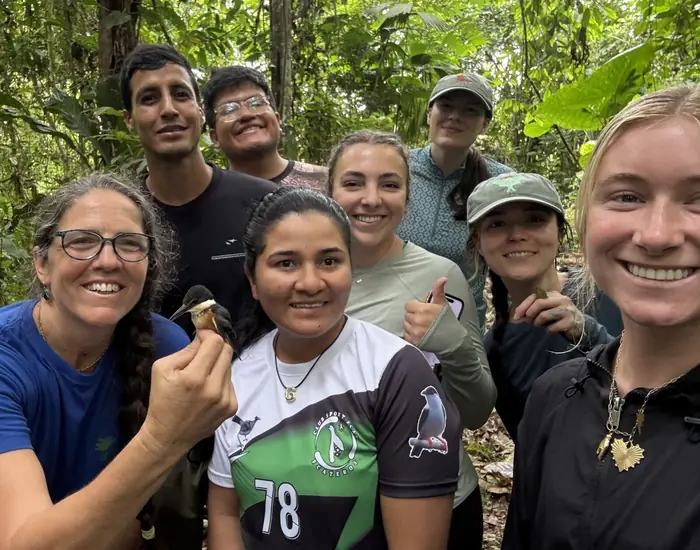
Our project aims to understand the status and response of the forest bird community to habitat restoration and forest management. Using point counts, transects, and mist netting efforts we are monitoring the diversity, abundance and survival of birds at the FCAT preserve over time.
Monitoring birds in regeneration plots using point counts
Researchers: Juan Freile, Gloria Loor, Gregory Paladines
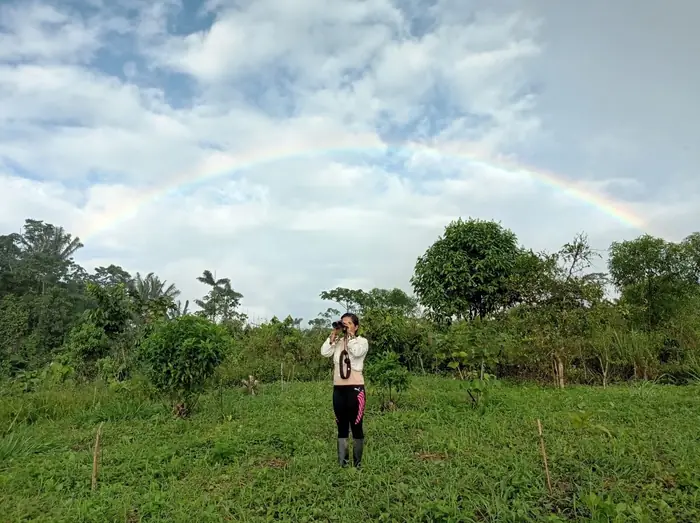
Monitoring bird communities provides a useful surrogate to understand the outcomes of habitat recovery after assisted and natural restoration. In order to assess temporal changes in community composition, bird species richness and abundances in regeneration plots, we undertook bird point counts from November 2022 to December 2025. We set up six point counts in each of the two experimental regeneration parcels. In each point count we undertook 10-minute counts of all birds observed, estimating distance to the nearest 5 m within a 50-m radius and estimating height above the ground. Each point count was surveyed 216 times in the 3-year study period, including 108 surveys in the rainy season and 108 in the dry season. Overall, we found 202 species, with a yearly increase in species richness. Regeneration plots were dominated by species tolerant to degraded areas (e.g., omnivorous tanagers, sallying flycatchers, granivorous seedeaters). Yet, point counts that experienced a marked growth of secondary vegetation or point counts situated closer to forest borders had more forest-based species (e.g., bark-searching and understory insectivores, forest-dependent frugivores). Beyond collecting bird data, the project aimed to train FCAT field members in bird surveying and identification, an objective that was successfully accomplished through the surveying time.
Seed dispersal in a landscape of restoration
Researchers: Nathan Duerr, J. Leighton Reid, Medardo Quiñones
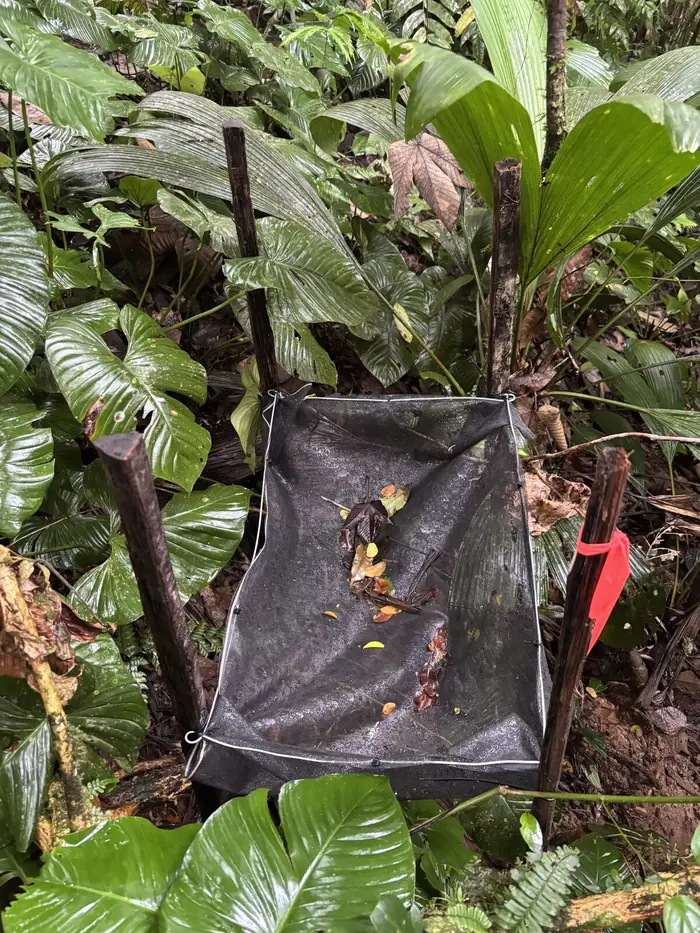
I am investigating how different restoration planting treatments affect seed dispersal dynamics and subsequent establishment of restored rainforest. I am planning to use a combination of seed traps, camera traps, and mist nets to better understand how applied nucleation treatments influence seed disperser activity and overall seed rain.
Soil, Root and Microbial Responses to Reforestation
Researchers: Mareli Sanchez-Julia, Michelle Wong, Sunshine Van Bael, J. Leighton Reid, Jordan Karubian, Karla Zambrano, Sarah Uher
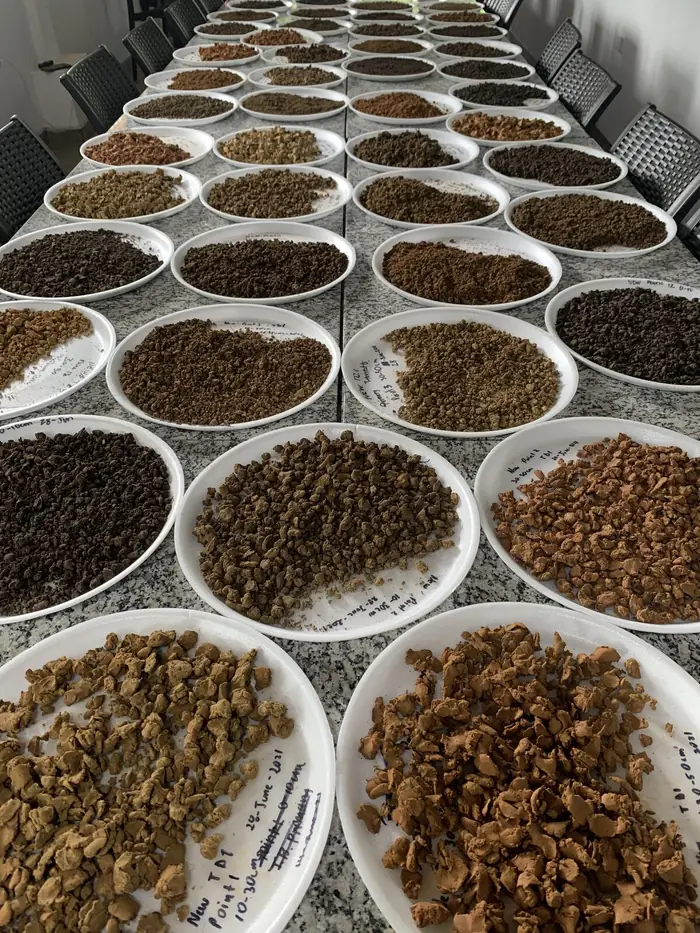
Soils and their living microorganisms are the foundation of forest ecosystems. They cycle nutrients, regulate water supply, store carbon, stabilize soil, and sustain plant and animal biodiversity. During forest regeneration, it is unclear whether belowground diversity and function recovers with aboveground productivity, and how management practices influence these trajectories. Our project aims to quantify fungal and bacterial diversity across a gradient of intact forest to degraded pasture to understand how community composition and diversity shift with land use, and to test how reforestation practices (tree island density and plant species richness) influence the recovery of soils, roots and microbial communities over time. By uncovering how reforestation practices influence, and are influenced by, soil properties and microbial composition, we will gain insight into the linkages between coupled above- and belowground trajectories of recovering forests.
Thermal Ecology of Herpetofauna and Birds
Researchers: Alex R. Gunderson, Andrew Love, Martha Barta
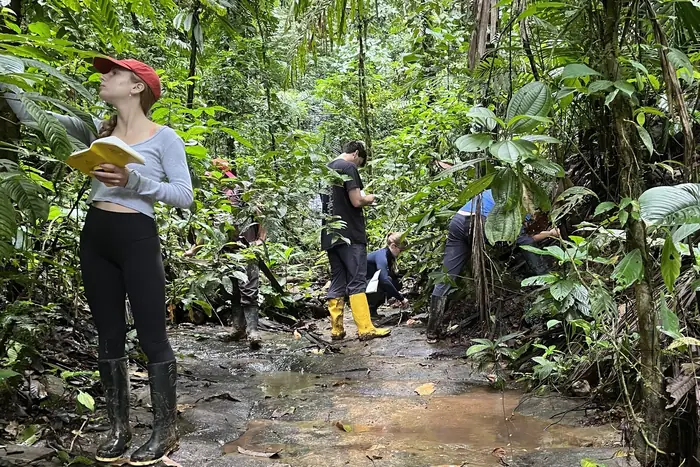
I investigate how thermal environments influence ecological phenomena. I have two main projects. One focuses on how temperature change as a result of deforestation affects amphibian community composition, and the other investigates how temperature may constrain the intensive mating displays of white-bearded manakins.
Using passive acoustic monitoring to explore how the environment shapes species interactions in northwest Ecuador
Researchers: Maia Edwards, Gloria Loor, Darwin Zambrano, Gregory Paladines, Juan Freile, Jordan Karubian
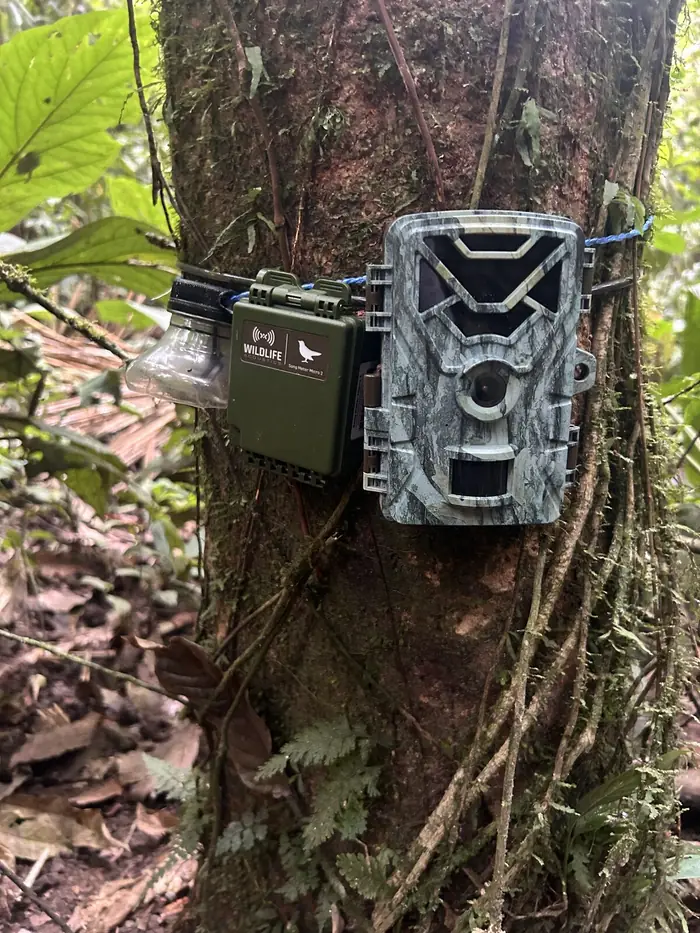
Deforestation and land conversion are reshaping tropical ecosystems worldwide. The Choco forest in northwest Ecuador is a marked example of such land-use change, presenting a complex mosaic of habitat types from primary forest to grassland pasture characteristic of 'working' tropical landscapes around the world. However, the mechanisms shaping avian biodiversity in these landscapes remain poorly understood. My dissertation examines how environmental variation influences competition among functionally similar bird species across this full gradient of habitat types in the Choco region of Ecuador, ultimately shaping communities across the landscape. Over the next years, I will work alongside FCAT's Biochocó project and use passive acoustic monitoring and automated detection algorithms to examine changes in species richness in relation to habitat metrics across 102 sites spanning seven different habitat types. With the help of local guides, I will also conduct conspecific playback experiments to assess baseline levels of aggression and competition between closely related species.
Woody plant community reassembly
Researchers: J. Leighton Reid, Rakan A. Zahawi, Jordan Karubian, Carlos Aulestia, Milton Tirado, Nathan Duerr
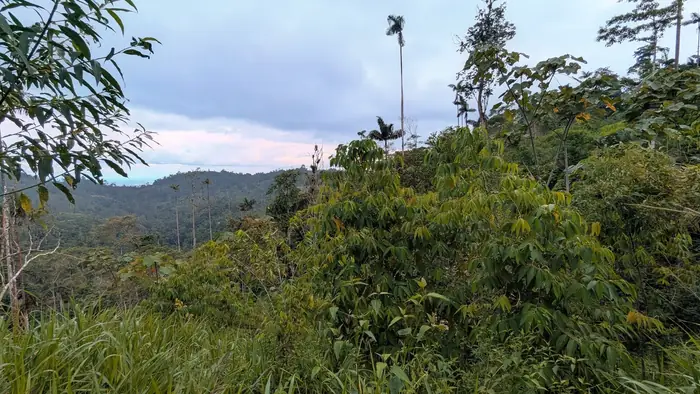
This project evaluates changes in woody plant regeneration through time (2024–2029) in relation to experimental forest restoration. Our expectation is that planted pioneer trees like cecropias and figs will produce copious fruits that will attract fruit-eating animals to a greater degree than alternative tree plantings that do not include these species. As they move through the landscape, fruit-eating animals will disperse the seeds of rainforest plants. Experimental plantings will also generate variation in light, temperature, humidity, and soil quality; these environmental conditions will act as filters allowing only the best-adapted plant species to regenerate. Between seed dispersal and environmental filtering, we predict that seed dispersal opportunities will be more important in determining the species composition of regenerating rainforest plants. If so, FCAT and other conservationists may save time and money by planting a smaller number and diversity of fruit-producing trees to restore Chocoan rain forest.