Soil, Root and Microbial Responses to Reforestation
Soils and their living microorganisms are the foundation of forest ecosystems. They cycle nutrients, regulate water supply, store carbon, stabilize soil, and sustain plant and animal biodiversity. During forest regeneration, it is unclear whether belowground diversity and function recovers with aboveground productivity, and how management practices influence these trajectories. Our project aims to quantify fungal and bacterial diversity across a gradient of intact forest to degraded pasture to understand how community composition and diversity shift with land use, and to test how reforestation practices (tree island density and plant species richness) influence the recovery of soils, roots and microbial communities over time. By uncovering how reforestation practices influence, and are influenced by, soil properties and microbial composition, we will gain insight into the linkages between coupled above- and belowground trajectories of recovering forests.
Research Question
- How does fungal and bacterial composition and diversity shift with land use?
- Do reforestation practices (tree island density and plant species richness) influence root biomass, soil properties and microbial communities over time?
- How do above- and belowground recovery processes influence each other?
- Are aboveground metrics of plant recovery (growth, survival, productivity) correlated with belowground metrics (nutrient availability, aggregate stability, organic matter content, root symbiont composition)?
Methods
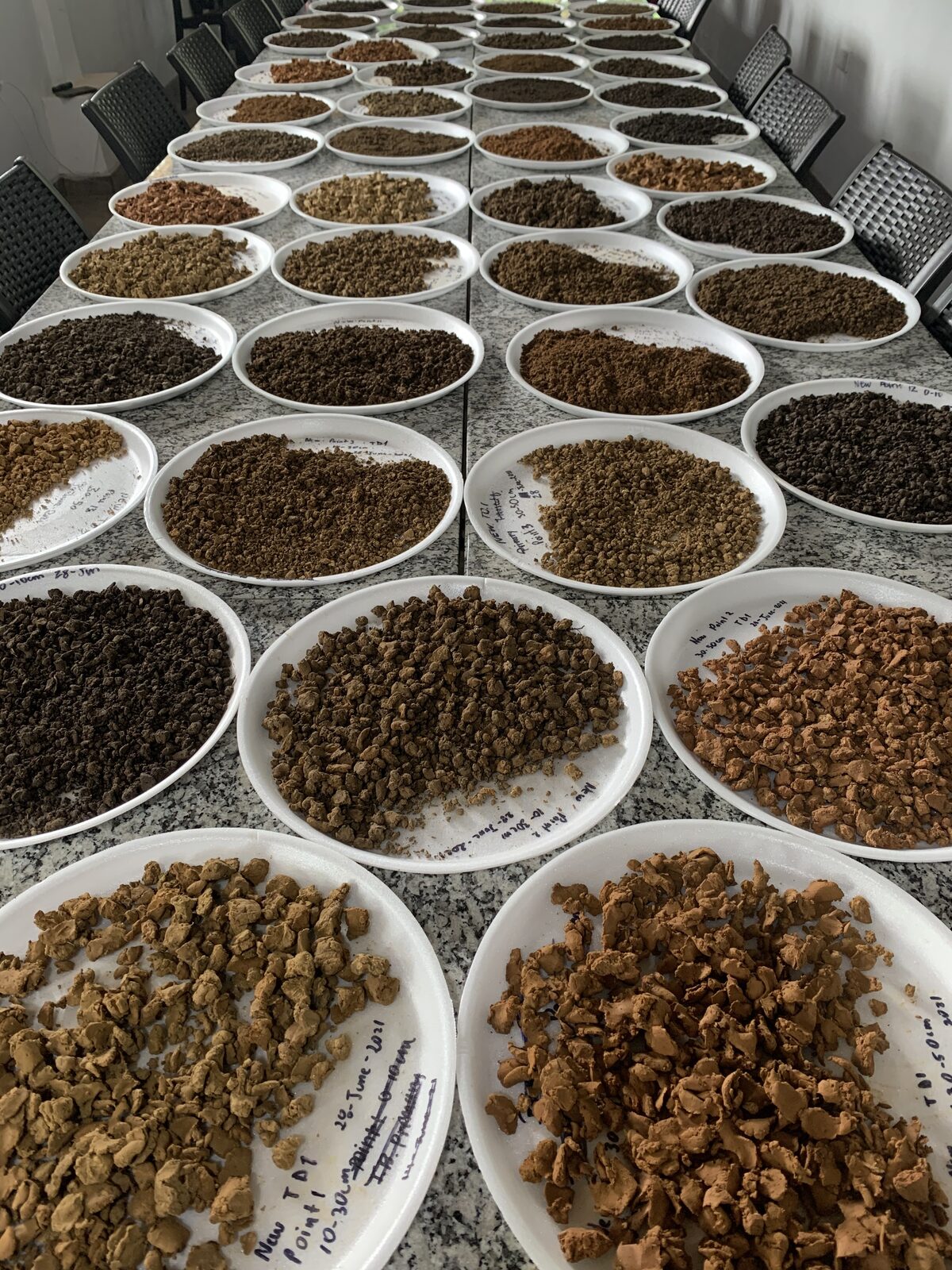
- Sampling soil cores (0-10 cm; 10-30 cm) in tree islands, established monitoring stations, and between tree islands to assess the influence of tree island density and tree planting richness on soil properties.
- DNA sequencing to understand fungal and bacterial composition and diversity.
- Establishment of root ingrowth cores to quantify root production, biomass and mycorrhizal colonization.
- Soil properties determined in the laboratory: pH, bulk density, total C and N (elemental analyzer), nutrient availability, microbial biomass, enzyme activity.
Key Findings
Data collection in progress.