Using passive acoustic monitoring to explore how the environment shapes species interactions in northwest Ecuador
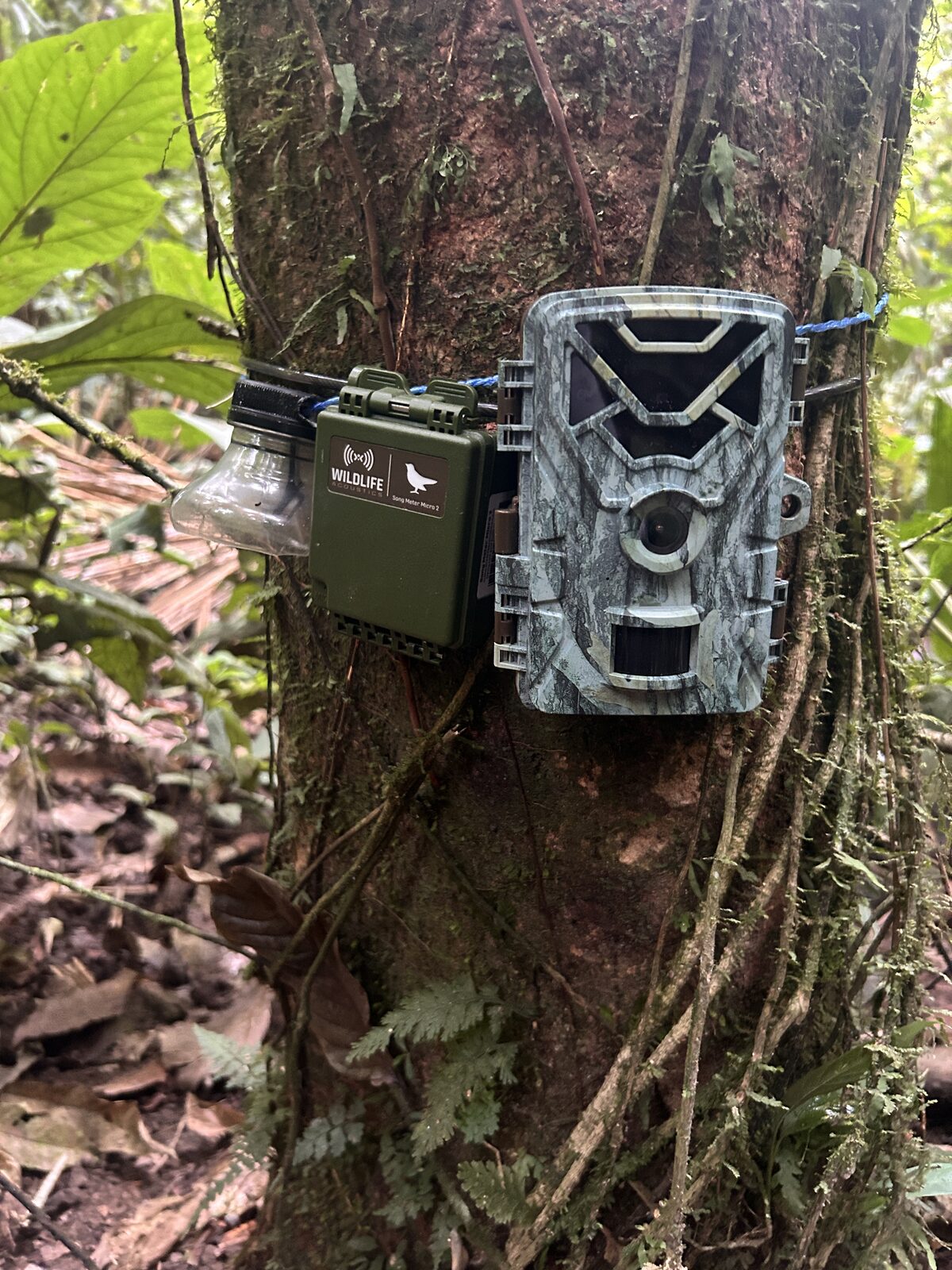
Deforestation and land conversion are reshaping tropical ecosystems worldwide. The Choco forest in northwest Ecuador is a marked example of such land-use change, presenting a complex mosaic of habitat types from primary forest to grassland pasture characteristic of 'working' tropical landscapes around the world. However, the mechanisms shaping avian biodiversity in these landscapes remain poorly understood. My dissertation examines how environmental variation influences competition among functionally similar bird species across this full gradient of habitat types in the Choco region of Ecuador, ultimately shaping communities across the landscape. Over the next years, I will work alongside FCAT's Biochocó project and use passive acoustic monitoring and automated detection algorithms to examine changes in species richness in relation to habitat metrics across 102 sites spanning seven different habitat types. With the help of local guides, I will also conduct conspecific playback experiments to assess baseline levels of aggression and competition between closely related species.
Research Question
This project aims to answer two main questions:
- How does the environment shape interspecific competition and cooperation between bird species in northwest Ecuador?
- How do these interactions shape patterns of biodiversity?
Methods
Manually review BirdNET detections from the Biochocó project to create species-specific thresholds and validate detections.
Conduct playback experiments in the field to elicit antagonistic calls that can be linked to competitive behaviors in birds. Train a model to identify these competitive interactions in the passive acoustic monitoring data across all site types. Degree of competition, taken from the distribution of these interactions, along with biodiversity taken from BirdNET detections, will be correlated with habitat metrics such as canopy height and density. Future LiDAR scans will also generate complexity and NDVI data to be used alongside.
Key Findings
BirdNET detections have not been validated yet and the study only has about 1/4 of the planned deployments, but a preliminary analysis of species richness across habitat types shows that primary forest sites have the least species detections (richness). GIZ cacao habitats had the highest species richness detected. Statistical tests yielded a significant ANOVA, followed by a Tukey HSD. This could reflect some ecological interaction between species in these sites, but another likely answer is that model detection varies by site and that sound might not travel as far in the primary forests. Measures of sound attenuation taken at each site will be used to resolve this possible error.